
🏦 Wall Street’s Largest Bank Makes Its Tokenization Case
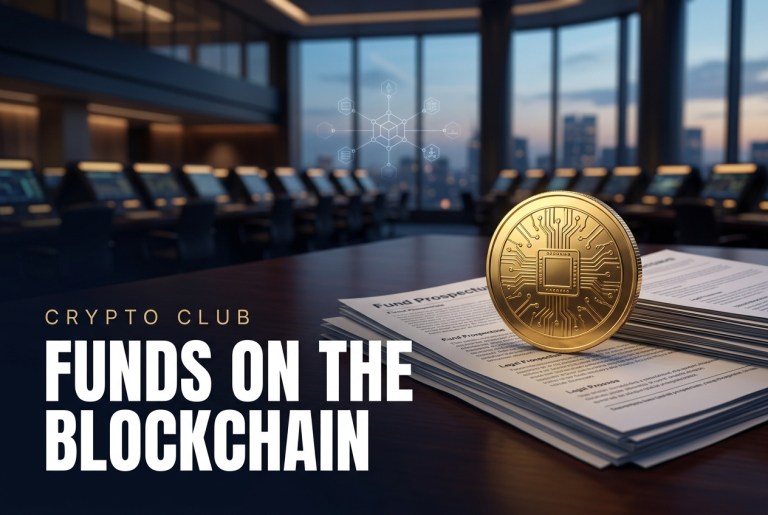
JPMorgan, the world’s largest bank by market capitalization, has made its position clear: tokenization is not a niche blockchain experiment but a structural shift that will touch the entire funds industry. The bank’s global head of ETF product for securities services, Ciarán Fitzpatrick, stated that while tokenization will become embedded in the ETF ecosystem, the industry is still a couple of years away from genuinely compelling use cases. That measured framing matters. JPMorgan is not hyping blockchain for its own sake; it is building real infrastructure through Kinexys, its blockchain business unit, and signaling that meaningful adoption requires solving real workflow problems rather than chasing headlines. For investors, this is a useful signal: institutional adoption is real but methodical, and the most important developments are still forming beneath the surface of the market.
🔗 Two Paths to Tokenized Funds
JPMorgan has identified two distinct technical models for bringing tokenization to the funds world. The first is a synthetic approach, where tokenized instruments use derivatives to replicate the performance of an underlying asset without the fund shares themselves living on a blockchain. This model is faster to implement because it does not require rebuilding existing fund structures. The second is a native model, where fund shares are issued directly on a blockchain, removing several layers of intermediary costs tied to custodians and clearinghouses. The native model holds greater long-term promise because it addresses the root of the inefficiency rather than layering a digital wrapper on top of an analog system. The Block reported that JPMorgan views both approaches as valid entry points, with the native model representing the more transformative but operationally demanding trajectory for fund managers and their technology partners.
⏳ Why the Timeline Is Measured, Not Pessimistic
Saying that good tokenization use cases are a couple of years away is not a dismissal; it is an accurate read of where the infrastructure stands. Three significant barriers remain before tokenized funds become mainstream. First, regulatory alignment is incomplete. Most jurisdictions have not yet produced clear frameworks for how tokenized fund shares are treated legally, which creates liability uncertainty for issuers and investors alike. Second, interoperability between legacy settlement systems and on-chain infrastructure is still rough. Most fund managers run operations built on T+1 settlement cycles, and integrating atomic, near-instant settlement requires reworking compliance, accounting, and reporting pipelines that were not designed for blockchain inputs. Third, demand from end investors has not yet reached a level that justifies the transition costs at scale. Enthusiasm is building, but BDO analysts note that robust infrastructure and clear investor demand must arrive together, and the industry has historically underestimated how long that synchronization takes.
📈 The Real-World Asset Market Is Already Moving
While JPMorgan urges patience on ETF tokenization, the broader real-world asset tokenization market is already scaling quickly. Tokenized RWAs hit $27.6 billion in April 2026, led by fixed income products and money market funds that have found a practical niche among institutional investors seeking yield with on-chain flexibility. BlackRock’s BUIDL fund, the largest single tokenized product, holds $1.9 billion in assets through its partnership with Securitize on Ethereum. Franklin Templeton’s BENJI fund manages $680 million across Stellar and Polygon, delivering consistent yields in the 4.3 to 4.6 percent range. These products prove the concept works at scale for low-risk, high-liquidity instruments. Analysts at McKinsey project the RWA tokenization market will reach $2 trillion by 2030, while Standard Chartered estimates $30 trillion by 2034. The global ETF market alone stands at $19.5 trillion today and is projected to reach $35 trillion by 2030, which means even a partial tokenization of that base would represent an enormous shift in how capital moves through the system.
⚙️ Kinexys and JPMorgan’s Expanding Blockchain Footprint
JPMorgan is not waiting passively. The bank’s Kinexys platform is scheduled for a wider rollout in 2026, with Kinexys Fund Flow targeting alternative investment strategies including real estate, infrastructure, and private credit, which are asset classes where illiquidity and administrative overhead have historically made investing cumbersome for all but the largest institutions. The bank has already completed the first private equity fund tokenization on its own blockchain, a transaction that signals operational readiness rather than theoretical capability. JPMorgan CEO Jamie Dimon has publicly pushed the firm to move faster, acknowledging that blockchain-based competitors including stablecoins, smart contracts, and tokenized instruments are competing directly with traditional banking infrastructure. In January 2026, Kinexys announced plans to bring JPM Coin natively onto the Canton Network, a privacy-focused distributed ledger, extending the bank’s digital cash capabilities to a broader institutional ecosystem. This combination of product launches and strategic integrations represents one of the most active institutional blockchain deployment programs in the industry.
🎯 What Traders and Investors Should Watch Next
The near-term catalyst investors should monitor is the Depository Trust Company’s blockchain settlement service, which received a no-action letter from the SEC in December 2025 and is expected to be production-ready in the second half of 2026. If the DTC’s platform launches on schedule, it would create regulated, market-standard infrastructure that dramatically lowers the barrier for fund managers to adopt on-chain settlement without rebuilding their own systems from scratch. Separately, pilot programs from WisdomTree, 21Shares, and Hashnote on tokenized fund wrappers are worth following as early indicators of which product structures gain regulatory and institutional traction. For traders, the practical signal is not which blockchain protocol wins but whether tokenized fund products begin offering measurably better liquidity, lower fees, or faster settlement than their traditional equivalents. JPMorgan’s honest assessment that compelling use cases are still forming is actually one of the clearest buy signals the space has seen: institutional infrastructure is being built now, before retail demand fully materializes, which is the pattern RWA analysts consistently identify as the precursor to sustained adoption cycles.
Sources
https://www.theblock.co/post/398876/jpmorgan-tokenization-will-change-entire-funds-industry-good-use-cases-years-away
https://www.crowdfundinsider.com/2026/04/275473-jp-morgan-says-tokenization-could-transform-funds-industry-but-best-use-cases-may-emerge-years-later/
https://www.crypto-news-flash.com/jpmorgan-says-tokenization-will-reshape-funds-industry-though-strong-etf-use-cases-remain-years-away/
https://www.jpmorgan.com/kinexys/index
https://www.fxstreet.com/cryptocurrencies/news/jpmorgan-set-to-launch-tokenization-platform-kinexys-fund-flow-in-2026-202510310030
https://en.spaziocrypto.com/rwa/tokenized-rwa-27-billion-institutional-boom-2026/
https://blocklr.com/news/rwa-tokenization-2026-guide/
https://www.bdo.com/insights/industries/fintech/trends-in-tokenization-reimagining-real-world-assets
https://www.mexc.com/news/914367
https://www.coindesk.com/markets/2026/04/06/jamie-dimon-says-jpmorgan-must-move-faster-as-tokenization-reshapes-finance
Crypto Club and Mode Mobile communications are for informational purposes only, and are not a recommendation, solicitation, or research report relating to any investment strategy, security, or digital asset. All investments involve risk including the loss of principal and past performance does not guarantee future results.
Any information contained in this commentary does not purport to be a complete description of the securities, markets, or developments referred to in this material. The information has been obtained from sources considered to be reliable, but we do not guarantee that the foregoing material is accurate or complete. There is no guarantee that any statements or opinions provided herein will prove to be correct.
Get fresh insights, breaking news, and hidden gems in the world of crypto—delivered straight to your inbox with our Crypto Cookies newsletter.
Don’t miss out—sign up now and get your first bite of insider knowledge!