
⚖️ The Ruling That Ended the Case
Two brothers accused of draining $25 million from Ethereum trading bots in seconds walk free.

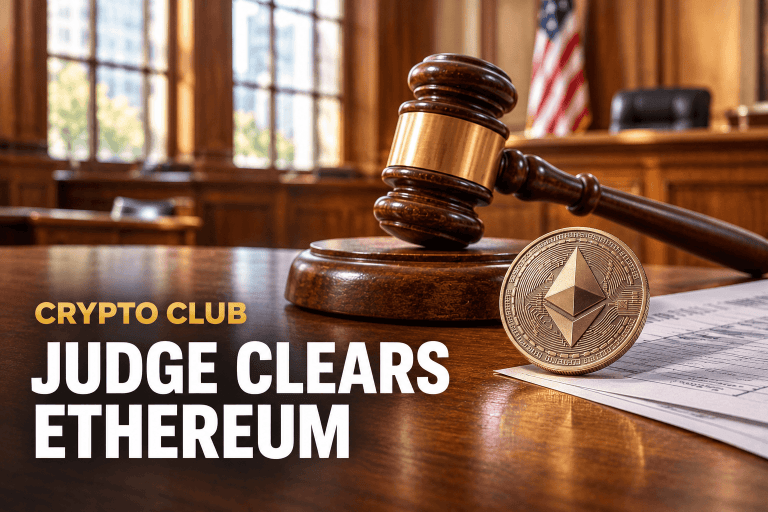
On November 16, U.S. District Judge Jessica Clarke in Manhattan acquitted Anton and James Peraire-Bueno of wire fraud, conspiracy to commit wire fraud, and conspiracy to commit money laundering, The Block reported.

The MIT-educated brothers were arrested in May 2024. Their trial ran nearly four weeks and ended in November 2025 with a deadlocked jury and a mistrial. A year later, Clarke granted their motion for a judgment of acquittal in a written ruling. That's a rare move. A judge can do that only when the evidence isn't enough for any reasonable jury to convict.

The ruling ends what CoinDesk described as the U.S. government's first criminal case over MEV, and the court clerk was directed to shut the file.
🥪 The Bots That Got Played
To follow this case, you need to know about sandwich bots.

When you place a trade on Ethereum, it waits in a public queue before a miner includes it in a block. Sandwich bots watch that queue. When they spot a big trade, they buy just before it and sell right after, pocketing the price move your trade causes. That extra profit from controlling transaction order is called MEV, short for maximal extractable value.

Prosecutors said the brothers turned that game on the bots.

In April 2023, they placed eight bait transactions designed to lure sandwich bots in, CoinDesk reported. They then offered their own validator, a computer that helps build Ethereum blocks, a block through the Ultrasound relay, a service that passes blocks between builders and validators.

The validator signed the block's header with two fields set to zero. The relay didn't check those fields and still released the block's contents. The brothers then rebuilt the block, kept the bots' purchases, and swapped their bait for trades that dumped the tokens the bots had just bought.

The bots lost about $25 million, according to the government. Flashbots, which builds the MEV-Boost software that relays run on, put the losses closer to $20 million in its own review. Cryptopolitan reported that the relay flaw has since been fixed. In one case, a bot run by Savannah Technologies swapped $2.3 million in USDC for $8.25 worth of Shiba Inu, Bitcoin.com News reported. The government said the whole thing took 12 seconds.
🧑⚖️ Why the Judge Said It Wasn’t Fraud
Wire fraud needs a lie. That's where the case fell apart.

Clarke ruled that prosecutors never proved a material misrepresentation, meaning a false statement that actually mattered to the people deceived. She found that the bait trades made no promises. No trader who drops a transaction into Ethereum's public queue agrees to be sandwiched, so a pending trade isn't a promise.

The faked signature didn't save the case. The relay never checked the falsified fields, so the false data had no effect, CoinDesk reported.

Then came the line that grabbed the crypto world's attention. Clarke described Ethereum as a trustless, highly adversarial environment, where participants have agreed to no rules of conduct or terms of use.

She was careful about what she wasn't saying. She wrote that the question was whether the conduct was wire fraud, not whether it was right. She cited a 2022 appeals court ruling holding that conduct can be improper or even despicable without being a federal crime. She also acknowledged the brothers hid their plans and may have undercut the spirit of the relay's design.
💸 The Brothers Kept Most of It
Most of the $25 million never came back.

Their validator was penalized about 1 ETH, worth a few thousand dollars, for its role. One wallet holding about $3 million of the proceeds was frozen. CoinDesk reported that the rest had been moved out by October 2023.

Defense lawyer Daniel Marx of Fick & Marx, who represents Anton, has said the brothers never lied to anyone about their trading activity. Some crypto policy voices backed that view early on. Coin Center executive director Peter Van Valkenburgh called the case a massive overstep back in 2025, The Block noted.

Prosecutors have not issued a statement since the ruling.
🤔 Why It Matters Beyond This Case
This ruling draws a line that many crypto traders will study.

On one side is code being used in ways its designers didn't intend. On the other is old-fashioned fraud, which needs a lie. Clarke put this case on the first side.

That could make prosecutors more cautious about bringing fraud charges over on-chain trading tactics, especially in markets with no formal rulebook. Industry groups pushed hard for that outcome. The DeFi Education Fund filed a brief warning that fuzzy criminal risk could scare developers away and push activity overseas. Bots and MEV traders already play rough with each other. One famous sandwich bot even lost $7.5 million to its own playbook earlier this year.

It also leaves open questions. The ruling covers criminal charges only. It doesn't decide whether bot operators could chase their losses in civil court. It applies to one case with one set of facts, not every exploit that touches a blockchain.
🎯 Final Takeaway: Code Isn’t Always a Contract
The big lesson here isn’t that anything goes on Ethereum. Federal fraud law requires a lie, and exploiting code alone may not be one.
For everyday users, the practical point is simple. Public blockchains are open and adversarial by design. If you trade on decentralized exchanges, bots can see your pending order and trade against it.
Washington still hasn’t written clear market rules for crypto. Until it does, courts will keep deciding where clever trading ends and crime begins, one case at a time.
Sources
- https://fingfx.thomsonreuters.com/gfx/legaldocs/akvewgjxkvr/11162026peraire.pdf
- https://www.coindesk.com/policy/2026/11/18/u-s-judge-says-ethereum-has-no-terms-of-use-clears-mit-brothers-of-usd25-million-fraud
- https://www.theblock.co/news/regulation/2026-11-16-peraire-bueno-brothers-acquitted-ethereum-mev-wire-fraud-441425
- https://news.bitcoin.com/regulation-and-legal/judge-acquits-mit-brothers-25m-ethereum-exploit-case/
- https://cryptonews.net/news/legal/33774907/
Crypto Club and Mode Mobile communications are for informational purposes only, and are not a recommendation, solicitation, or research report relating to any investment strategy, security, or digital asset. All investments involve risk including the loss of principal and past performance does not guarantee future results.
Any information contained in this commentary does not purport to be a complete description of the securities, markets, or developments referred to in this material. The information has been obtained from sources considered to be reliable, but we do not guarantee that the foregoing material is accurate or complete. There is no guarantee that any statements or opinions provided herein will prove to be correct.
Get fresh insights, breaking news, and hidden gems in the world of crypto—delivered straight to your inbox with our Crypto Cookies newsletter.
Don’t miss out—sign up now and get your first bite of insider knowledge!